Eltom Solar can help you harness the sun’s energy to power your home, business or electric vehicle.
Home » Eltom Solar PV And Battery Storage
Trusted by homes, schools, churches and businesses throughout the northwest, Eltom Solar provide solar pv installation to a host of different premises.
Installing Solar panels coupled with battery storage could ensure that you pay for little or no electricity even after the sun goes down. This is widely considered the best way to get the most out of your solar panels.
Alternatively, a solar array integrated with the right EV changer could run your vehicle with your own generated green energy. Premises that often have vehicles charging during the day could benefit from this setup.
Furthermore, homeowners maybe eligible for a grant under the ECO 4 scheme or a loan under the government-backed green deal initiative, both of which we are registered installers.


Initially, Eltom Solar offer a free solar survey, working with our clients to design the best system to suit their premises and budget. We’re then are able to calculate a cost-saving projection and offer a no-obligation quote for installation.
Our extensive experience working in both council and educational establishments ensures our engineers are all fully qualified and DBS checked.
We are members of the Renewable Energy Consumer Code providing consumer protection for home grown energy. We are also MSC certified guaranteeing quality of workmanship for low-carbon energy technologies by registering your new installation with a certificate.
If you are thinking about installing solar panels on your home, it’s natural to have questions. This FAQ covers the key things homeowners need to know about home solar PV systems, including how they work, installation requirements and important considerations before investing.
If you would like further advice about solar PV for your property, the team at Eltom Electrical will be happy to help – you can contact us for impartial advice.
Home solar PV (photovoltaic) is a system that allows you to generate your own electricity from sunlight using solar panels installed on your roof.
“PV” stands for photovoltaic, which simply means converting light into electricity. When sunlight hits the solar panels, they produce Direct Current (DC) electricity. An inverter then converts this into Alternating Current (AC), which is the type of electricity used to power your home’s lights, appliances and devices.
In simple terms, home solar PV allows you to produce your own electricity from sunlight instead of relying entirely on the national grid.
A home solar PV system is made up of several key components that work together to generate usable electricity for your property.
These typically include:
Some systems also include battery storage, which allows excess electricity to be stored for use later.
The cost of a home solar PV system in the UK typically ranges between £4,000 and £9,000 for most households, depending on the size of the system and your property.
As a general guide:
The exact cost of installing solar panels will depend on factors such as the number of panels required, your roof type and layout, the type of hardware used, and whether battery storage is included.
If you’re considering solar panels for your home, Eltom Electrical can provide a tailored, no obligation quotation based on your property and energy usage, contact us to find out more.
Yes — home solar panels can pay for themselves over time through savings on your electricity bills.
By generating your own electricity, you reduce the amount you need to buy from your energy supplier. You can also earn money for any excess electricity you export to the grid through the Smart Export Guarantee (SEG).
For many UK households, a solar PV system pays for itself within around 7 to 12 years, with continued savings after that.
To qualify for the Smart Export Guarantee (SEG) in the UK, your solar PV system must meet a few key requirements.
Your system must be installed by an MCS-certified installer, such as Eltom Electrical and use MCS-certified equipment. You will also need a smart meter or export meter capable of measuring the electricity your system exports to the grid.
Once your system is installed and registered, you can apply for an SEG tariff with a participating energy supplier, who will pay you for the excess electricity your solar panels export to the grid.
Most home solar PV systems are designed to last 25 to 30 years or more.
Solar panels themselves typically come with performance warranties of around 25 years, although many continue generating electricity well beyond this. Over time, their output may gradually reduce slightly, but they do not suddenly stop working.
Other components, such as the inverter, usually have a shorter lifespan and may need replacing after around 10 to 15 years.
Overall, a well-installed and properly maintained solar PV system can provide reliable electricity generation for decades.
While it is technically possible to buy solar panels and attempt a DIY installation, it is not recommended.
Solar PV systems must be installed safely, correctly connected to your property’s electrical system, and comply with UK regulations. To qualify for grid connection and Smart Export Guarantee (SEG) payments, the system must be installed and certified by an MCS-accredited installer, like Eltom Electrical.
For safety, compliance and warranty protection, home solar PV systems are best installed by qualified professionals.
Yes. If your solar PV system generates more electricity than your home uses, the excess energy can be exported to the grid.
In the UK, homeowners can receive payments for this electricity through the Smart Export Guarantee (SEG), a government-backed scheme that requires certain energy suppliers to pay small-scale generators for the electricity they export.
Battery storage allows you to store excess electricity generated by your solar panels instead of sending it straight to the grid.
During the day, your solar panels generate electricity for your home. If you produce more electricity than you need at that time, the surplus can be stored in a home battery. You can then use this stored energy later, such as in the evening or at night when your panels are no longer generating power.
A DNO (Distribution Network Operator) is the company responsible for operating and maintaining the local electricity network in your area.
In the context of home solar PV, the DNO manages how electricity systems connect to the grid. When a solar PV system is installed, Eltom Electrical will notify the DNO or apply for permission to connect the system to the local electricity network.
Do I need to inform the DNO if I am having a solar PV system installed on my house?
Yes. In the UK, the Distribution Network Operator (DNO) must be informed when a solar PV system is installed and connected to the electricity network. Eltom Electrical will handle this process for you.
A home solar PV system can generate electricity that can be used to charge an electric vehicle (EV).
During the day, your solar panels produce electricity that can power your home or be used to charge your car through a compatible EV charger. Some smart chargers can also prioritise using solar energy when it is available. You can also pair your home solar Array with a battery storage solution, allowing you to store solar energy that can be used to charge your EV and power your home.
No. Home solar panels do not require batteries to work.
A solar PV system can generate electricity for your home without battery storage. Any excess electricity that you do not use at the time can be exported to the grid.
Batteries are an optional addition that allow you to store unused solar electricity and use it later.
Home solar panels generally require very little cleaning or maintenance. In the UK, rainfall usually helps to wash away dust, pollen and other debris that may accumulate on the panels. In most cases, this is enough to keep them operating efficiently.
However, if panels become heavily soiled — for example from bird droppings, leaves or nearby trees — occasional cleaning may help maintain performance.
In most cases, planning permission is not required to install solar panels on a residential property in the UK.
Solar panels are usually considered a permitted development, provided they are installed in a way that minimises their visual impact and do not extend significantly beyond the roof surface.
However, planning permission may be required if your property is a listed building, located in a conservation area, or if the installation does not meet permitted development guidelines.
In most cases, planning permission is not required to install solar panels on a residential property in the UK.
Solar panels are usually considered a permitted development, provided they are installed in a way that minimises their visual impact and do not extend significantly beyond the roof surface.
However, planning permission may be required if your property is a listed building, located in a conservation area, or if the installation does not meet permitted development guidelines.
Yes. Solar panels can be fitted with pigeon proofing to prevent birds from nesting underneath them.
This typically involves installing a discreet mesh barrier around the edges of the panels. The mesh prevents birds from accessing the space beneath the panels while still allowing airflow and drainage.
Pigeon proofing can be installed at the same time as your solar panels or added afterwards.
No. A smart meter is not required for your solar panels to generate electricity and power your home.
However, a smart meter is usually needed if you want to receive payments for exporting excess electricity to the grid through the Smart Export Guarantee (SEG).
An inverter is a key component of a home solar PV system that converts the electricity produced by the solar panels into a form your home can use.
Solar panels generate direct current (DC) electricity, while homes use alternating current (AC) electricity. The inverter converts the DC electricity from the panels into AC electricity so it can power your appliances and devices.
Solar panels are attached to your roof using a mounting system designed to hold them securely in place.
The mounting system is fixed to the roof structure using specialised brackets or roof hooks. Rails are then attached to these brackets, and the solar panels are secured to the rails.
When installed correctly, this process should not cause damage to your roof. Using an experienced, accredited solar installer like Eltom Electrical helps ensure the system is fitted safely and the roof remains properly sealed and weatherproof.
If your solar PV system is not generating enough electricity to meet your home’s needs, your property will automatically draw the additional power required from the grid.
This process happens seamlessly through your existing electricity supply, so your home continues to receive the power it needs even when solar generation is low, such as at night or during periods of low sunlight.
Most homes in the UK can be suitable for solar PV, but it depends on several factors.
These include the direction and angle of your roof, the amount of unshaded roof space available, and whether the roof is in good structural condition. South-facing roofs typically generate the most electricity, although east- and west-facing roofs can also work well.
Eltom Electrical can carry out a comprehensive survey of your property to confirm whether home solar PV is a viable choice for your home.
Yes, solar panels can still generate electricity in partially shaded conditions, but shading can reduce their overall performance.
Trees, nearby buildings, or other obstructions that block sunlight may limit how much electricity the panels can produce. However, modern solar systems can be designed to reduce the impact of shading.
Eltom Electrical can assess any shading during an initial site survey and design a system that maximises the available sunlight.
Yes. A site survey is typically carried out before installing a home solar PV system. The survey allows the installer to assess factors such as the roof structure, orientation, available space, shading and electrical setup to ensure the system can be installed safely and perform efficiently. Eltom Electrical will carry out a comprehensive survey of your property before installation to confirm system suitability and design the most appropriate solar PV solution for your home. Contact us to arrange a free, no obligation survey.
Yes. A site survey is typically carried out before installing a home solar PV system. The survey allows the installer to assess factors such as the roof structure, orientation, available space, shading and electrical setup to ensure the system can be installed safely and perform efficiently. Eltom Electrical will carry out a comprehensive survey of your property before installation to confirm system suitability and design the most appropriate solar PV solution for your home. Contact us to arrange a free, no obligation survey.
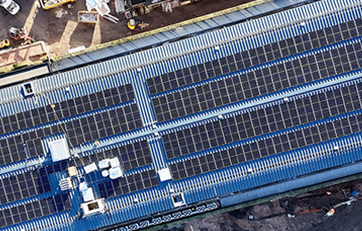
Looking to invest in commercial solar panels? We’ll help you maximize energy efficiency and long-term savings